You are watching your traffic erode. You rank on page one, but the clicks aren’t coming.
The reason is simple: Users aren’t clicking anymore; they are reading the answer directly on the search results page. Google’s AI Overviews (formerly SGE) and tools like ChatGPT act as gatekeepers, scraping your content to synthesize answers without ever sending a visitor to your site.
To survive, you must stop writing just for humans and start architecting for algorithms. You need to shift from traditional SEO to AEO (Answer Engine Optimization).
At Khalid SEO, we specialize in future-proofing digital assets against this exact shift. This guide explores the specific formatting strategies required to turn your content into the “source of truth” that AI models prefer to cite.
Understanding How AI Models “Read” Your Content
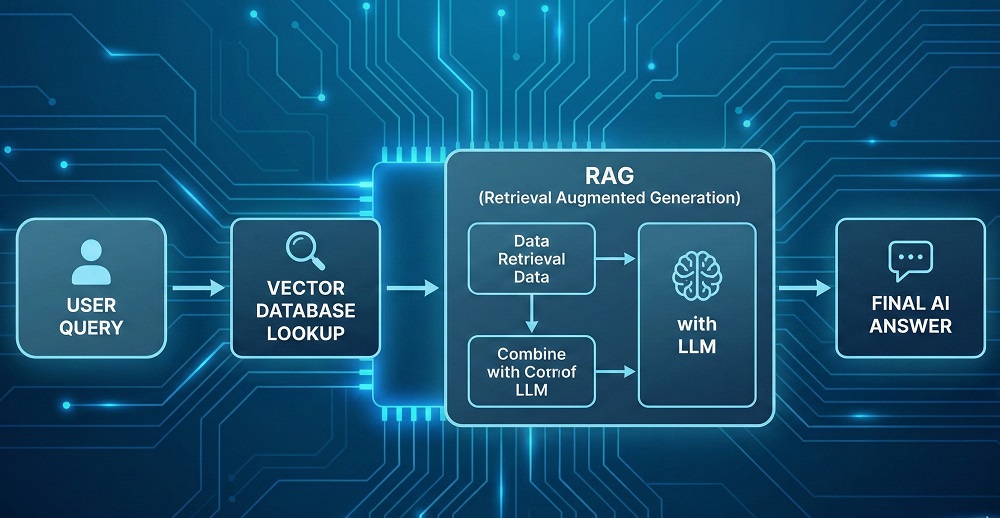
AI doesn’t “read” an article from top to bottom like a human does. It retrieves information based on Vector Embeddings.
When a user asks a question, the AI breaks your content into “chunks” (tokens). It then assigns these chunks a mathematical value based on their context. If your content is a wall of text, the AI struggles to isolate the specific fact it needs.
To be cited, you must make your content modular. You are not writing an essay; you are building a database of answers that the AI can easily query and retrieve.
The “Answer-First” Formatting Strategy (The Inverted Pyramid)
Traditional blogging taught you to build suspense. AEO requires the opposite. You must give away the answer immediately.
AI models prioritize content that directly addresses the query with high confidence. We call this the Inverted Pyramid style.
The 40-Word Rule
Your definition or direct answer should appear immediately after the H1 or the relevant H2 question. Keep this answer between 40 and 60 words.
This is the “sweet spot” for AI generation. It is long enough to be substantive but short enough to fit into a generated summary without heavy editing.
Front-Loading the Truth
Do not bury the lead.
- Bad: “There are many factors to consider when looking at how to fix a leaking pipe, but first let’s talk about tools…”
- Good: “To fix a leaking pipe, first turn off the main water supply valve. Next, drain the remaining water from the line by opening the lowest faucet in the house.”
Structuring for Scannability: Lists, Tables, and Headers
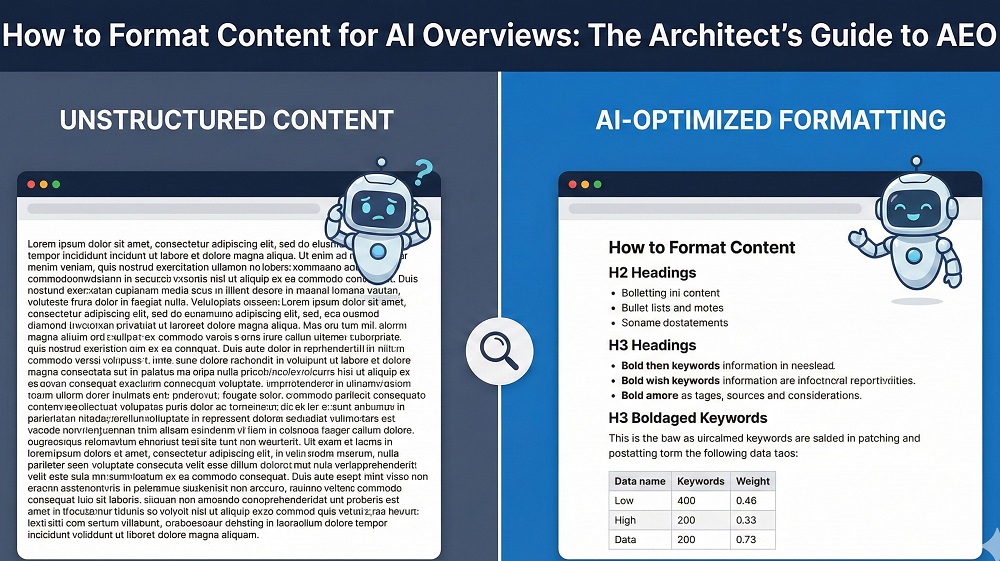
AI models love structure. Unstructured text is difficult to parse with high confidence. Structured data, however, is essentially a labeled dataset.
To optimize for Passage Indexing and AI retrieval:
- Use Descriptive H2s and H3s: Don’t use “Conclusion” or “Tips.” Use “5 Steps to Configure JSON-LD.”
- Bullet Points: Use them for features, benefits, or lists of items.
- Ordered Lists: Mandatory for step-by-step instructions.
- Data Tables: If you are comparing two or more things, use a table. AI can extract row/column data with near 100% accuracy.
Technical Signals: Schema Markup & HTML Tags
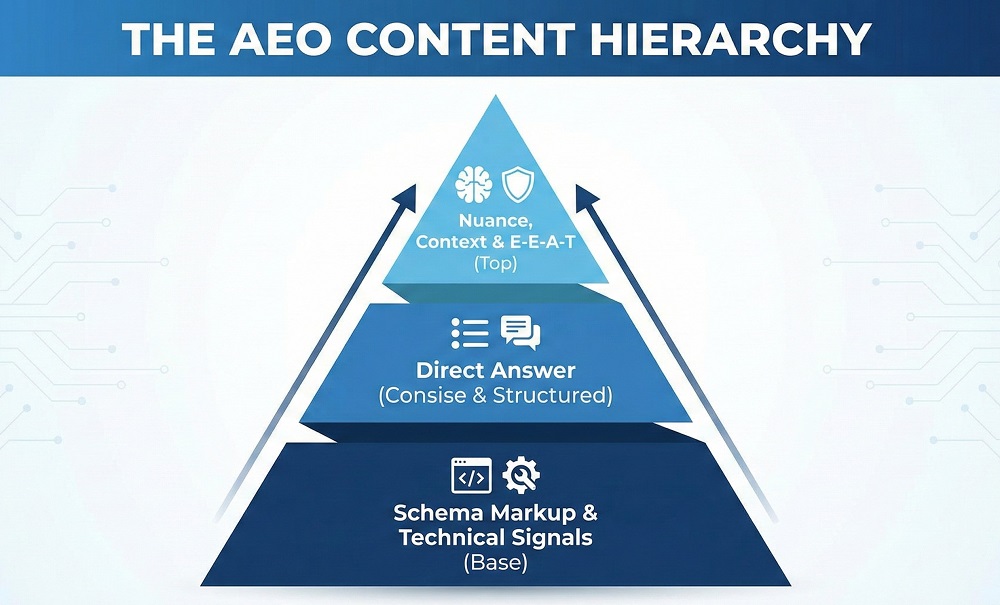
Your formatting is the visual signal; your code is the explicit instruction.
You must use Schema Markup to explicitly tell the AI what your content is. At https://khalidseo.com/, we emphasize that Schema is no longer optional, it is your translator.
- FAQPage Schema: Wraps your Q&A sections in code that Google explicitly parses for rich results.
- HowTo Schema: Breaks down your tutorials into individual steps that AI can lift directly.
- HTML5 Tags: Use semantic tags like
<aside>for definitions and<summary>for key takeaways. This helps the AI distinguish between core content and supplementary info.
E-E-A-T and Citing Sources: Becoming the “Trusted Source”
Hallucination is the biggest risk for AI. To mitigate this, models are programmed to prioritize “High Confidence” sources.
This is where E-E-A-T (Experience, Expertise, Authoritativeness, Trust) becomes a technical ranking factor.
- Cite Primary Data: Don’t just make claims. Link to studies or original research.
- Author Bios: Ensure your content is attributed to a verifiable expert.
- Brand Authority: Consistent, high-quality output on a specific topic builds “Topical Authority.”
AEO vs. SEO: A Comparative Breakdown
Many strategists confuse the two. Here is how they differ.
| Feature | SEO (Search Engine Optimization) | AEO (Answer Engine Optimization) |
| Primary Goal | Rank #1 in Blue Links | Be the Single AI-Generated Answer |
| Success Metric | Click-Through Rate (CTR) | Citations & Brand Mentions |
| Content Style | Long-form, “Skyscraper” | Concise, Modular, “Chunked” |
| Target Audience | Humans searching for lists | AI Agents retrieving facts |
| Key Tactic | Backlinks & Keywords | Schema & Entity Salience |
Frequently Asked Questions (AEO & AI Search)
What is the best content format for Google AI Overviews?
The best format is the “Answer-First” structure. Place a concise direct answer (40–60 words) immediately after the question header. Follow this with bullet points or ordered lists to ensure easy parsing by LLMs.
How does Schema markup affect AI Search visibility?
Schema acts as a translator for AI, providing explicit context. By using schemas like FAQPage and Article, you help AI models confidently extract facts, increasing your chances of being cited as a source in AI Overviews.
What is the difference between SEO and AEO?
SEO focuses on ranking links, while AEO focuses on providing answers. AEO prioritizes optimization for AI generation (like ChatGPT or Gemini), focusing on citations and zero-click visibility rather than just driving traffic to a URL.
How long should paragraphs be for AI optimization?
Paragraphs should be kept to 2–3 sentences (approx. 40–50 words). AI models prefer “chunked” information that is semantically self-contained. Avoid large walls of text to ensure better retrieval by vector search algorithms.
Why is E-E-A-T important for AI Overviews?
AI models prioritize E-E-A-T to reduce hallucinations. Signals of authority, like expert authors and transparent sourcing – tell the AI that the content is factually accurate and safe to present to users as a definitive answer.
Future-Proofing Your Digital Footprint
The era of “10 blue links” is fading. The future belongs to those who can speak the language of the machines.
By structuring your content with clear logic, robust schema, and direct answers, you ensure your brand remains visible in the age of AI.
If you need a partner to help you navigate this transition, visit Khalid SEO. We build the strategies that keep you ahead of the algorithm.