


You dominate Google search results. Your organic traffic looks great. But when you ask ChatGPT for recommendations in your industry, your brand is nowhere to be found.
This is incredibly frustrating. You spend thousands on traditional SEO. Yet, AI platforms are recommending your competitors over you.
ChatGPT processes hundreds of millions of queries every week. If you ignore this gap, you will lose a massive chunk of future buyers. The fix requires a complete mindset shift. ChatGPT does not care about your Google rankings. It cares about Bing. Let us look at exactly why this happens and how to fix it.
Watch the full video here ⏬

Why Your Google Rankings Are Hiding Your AI Search Blind Spot
Many marketers think a number one spot on Google guarantees ChatGPT brand visibility. This is a dangerous myth. Google and OpenAI are competitors.
When ChatGPT needs fresh information, it does not scrape Google. It pulls live data straight from Bing.
Data from Seer Interactive proves this point. Their research found that 87 percent of ChatGPT citations align directly with top Bing search results.
This means your Generative Engine Optimization strategy must change. Winning on Google gives you a false sense of security. If you want AI search engines to see you, you must conquer Bing first.
The Mechanics of a ChatGPT Search (Understanding Query Fanouts)
To fix your AI visibility, you need to understand how the AI actually searches. ChatGPT does not just type your exact prompt into a search bar. It uses query fanouts.
Here is exactly how a query fanout works:
- The user inputs a prompt. They ask for the best products in your category.
- The AI expands the question. It generates several hidden background searches based on the prompt.
- The system queries Bing. It runs these new, specific questions through the Bing search engine.
- The model reads the top results. It analyzes the top-ranking Bing pages for those specific terms.
- The AI synthesizes an answer. It combines the Bing data with its training data to write a final response.
Look at the table below to see how a simple prompt explodes into multiple Bing searches behind the scenes.
| The User Prompt | The Hidden Bing Fanout Queries |
| “What are the best hotels in New York City?” | “Top rated luxury hotels in new york city recommendations” |
| “Best hotels in nyc top luxury and boutique hotels new york” | |
| “Top hotels in nyc luxury boutique best places to stay new york city” |
“Understanding these hidden searches is critical. The AI only knows what Bing shows it.“
The Data: Why Newer Brands Are Beating Heritage Giants
Age and review count used to be the ultimate trust signals. AI search changes the rules entirely. A recent study by Search Engine Land proved this.
The Baccarat vs. The Fifth Avenue Case Study
Researchers asked ChatGPT for the best hotels in New York City 68 times. They tracked which hotels the AI recommended. The results were shocking.
The Baccarat Hotel is an established luxury icon. It showed up a miserable 1.5 percent of the time. The Fifth Avenue Hotel is much newer. Yet, ChatGPT recommended it almost constantly.
Why did this happen? It had nothing to do with reviews or history. Look at the real data comparison below.
| Metric | The Baccarat Hotel | The Fifth Avenue Hotel |
| Year Founded | 2015 | 2023 |
| Google Reviews | 1,300+ | 213 |
| Review Rating | 4.6 | 4.6 |
| ChatGPT Visibility | 1.5% | 20% citations |
| Bing SERP Dominance | Low | High |
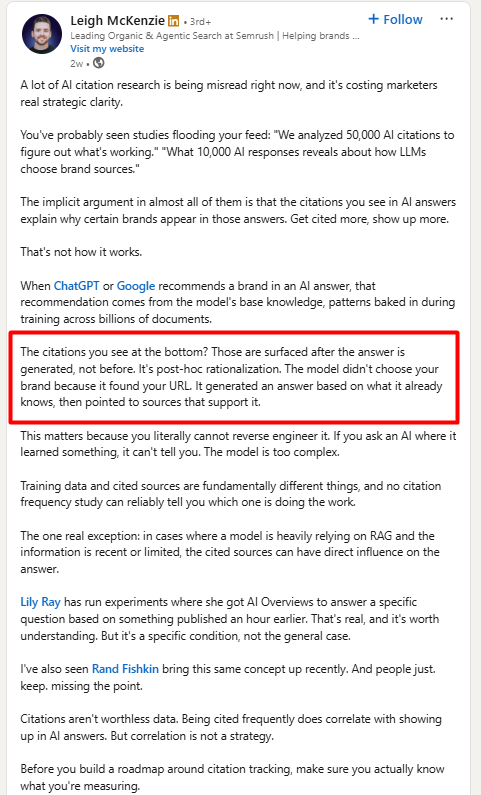
“The Baccarat outperformed the Fifth Avenue in top Google search results. But on Bing, the Fifth Avenue completely dominated the articles. As one SEO expert noted during the study, the AI simply generated its answer based on the URLs it found on Bing and ignored the rest.“


How to Pivot Your Digital PR for Answer Engines
Traditional digital PR focuses on getting links from massive sites to boost Google rankings. This approach fails in AI search. You need to adjust your tactics.
Why Targeting High-Authority Sites Isn’t Enough
Landing a mention in Forbes feels like a huge win. But the specific Forbes article matters immensely.
The Search Engine Land study found two different Forbes articles about NYC hotels. One ranked high on Google. The other ranked high on Bing.
- Google’s Top Forbes Article: Forbes Travel Guide Destinations
- Bing’s Top Forbes Article: Forbes Personal Shopper Best Hotels
The Baccarat was featured in the Google winner. It got them zero traction with ChatGPT. You need third-party mentions in the exact URLs that Bing favors.
Running a Bing-First Outreach Strategy
Do not rely purely on AI training data to carry your brand. You need a highly surgical approach.
First, identify the query fanouts for your core topic. Then, see which third-party articles rank on page one of Bing for those exact phrases.
Your new digital PR goal is simple. Get your brand added to those specific Bing-ranked articles. OpenAI will pull that data right into its next user response.
Audit Your Brand’s AI Visibility Right Now
You cannot fix what you do not measure. Stop checking your Google Analytics for a moment.
You need to perform a basic SERP analysis on Bing. Open an incognito window. Search for your top non-branded keywords on Bing.
If your brand is missing from the top three articles, your AI search optimization is failing. ChatGPT citations rely entirely on that Bing placement. Start your outreach campaign there.
“Leigh McKenzie posted on Linkedin“

Frequently Asked Questions
Why doesn’t my brand show up in ChatGPT?
ChatGPT relies heavily on Bing search results to answer current queries. If your brand does not rank well on Bing, ChatGPT will likely ignore you entirely. Even if you dominate Google search results, OpenAI uses Bing to pull live web data. Your visibility depends on showing up in the articles that Bing prefers.
Does ranking on Google help with ChatGPT visibility?
Ranking on Google does not directly influence ChatGPT brand recommendations. Dominating Google is great for traditional traffic but highly ineffective for securing mentions in OpenAI products. Studies clearly show that ChatGPT pulls its live web data primarily from Bing. A top spot on Google gives you zero advantage when a user asks an AI for advice.
What is a query fanout in AI search?
A query fanout happens when an AI takes a single user prompt and breaks it down into multiple specific background searches. It runs these hidden queries to gather diverse information. Instead of searching for one broad phrase, the AI searches for several related, highly specific questions. It reads the top Bing results for all of them before writing an answer.
How do I optimize my website for ChatGPT?
Focus your efforts entirely on a Bing-first digital PR strategy. Ensure your brand is mentioned favorably in the specific third-party articles that rank highly on Bing. Do not just blindly pitch high-authority websites. Find out exactly which articles are currently sitting on page one of Bing for your target keywords. Get your brand placed there.
Do citations in ChatGPT lead to brand mentions?
Yes. Research indicates a strong correlation between Bing search rankings, the citations ChatGPT generates, and the actual brands it mentions in its text output. A high placement in the sources ChatGPT pulls from Bing drastically increases your chance of recommendation. Users trust these mentions even if they never click the citation links.


AI Search Specialist (AEO, GEO) | Helping brands get found, answered, and cited | Win on Google & ChatGPT.
I help businesses show up where their customers are actually looking.
For a long time, that just meant chasing rankings on Google. Today, it means something entirely different: people are asking AI for answers.
My job is simple. I bridge the gap between traditional SEO and the new world of AI search. I make sure that when someone asks ChatGPT, Google’s AI, or any other engine a question in your industry, your brand is the definitive answer they get.
No magic tricks or complicated buzzwords – just clean, modern search strategies that get you visibility and highly qualified leads.
Want to see how we can make your brand the trusted answer?
👉 Let’s connect, or check out my exact strategies at khalidseo.com.