You are losing traffic to ChatGPT, Perplexity, and Google AI Overviews.
Users are getting their answers without ever clicking your links. You write incredible content, but these new AI engines treat your website like a black box. Traditional metrics do not reflect this invisible traffic drop. You are flying blind.
The rules of visibility have fundamentally changed. Moving from keyword matching to data structuring is the only way forward. Here is the exact Answer Engine Optimization (AEO) framework to force AI models to extract and cite your data.
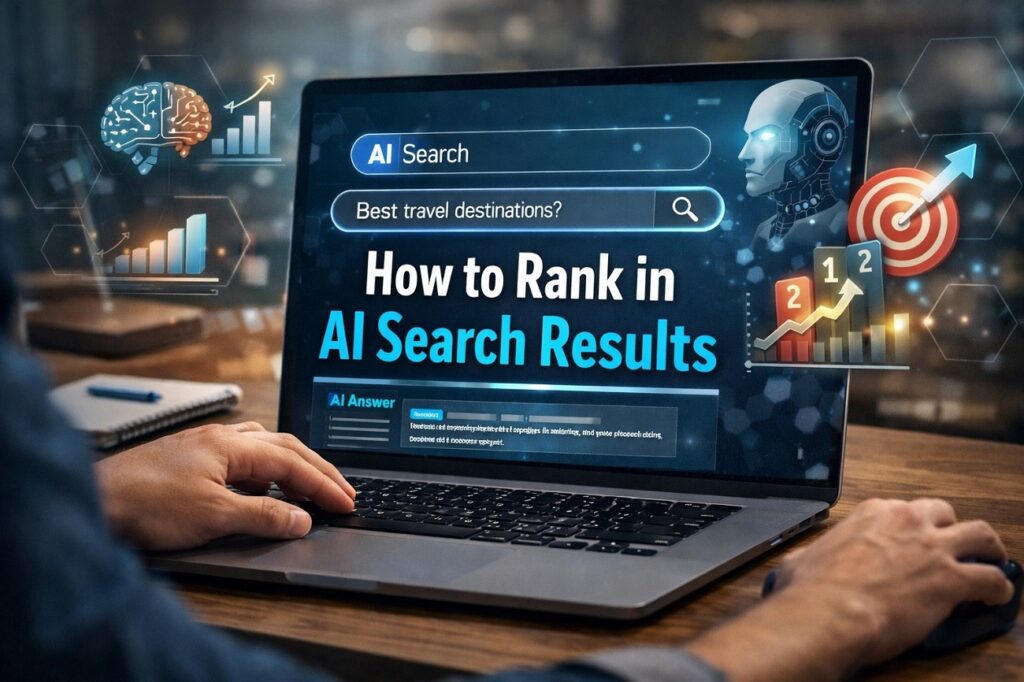
The New Paradigm: Traditional SEO vs. Generative Engine Optimization (GEO)
Generative Engine Optimization (GEO) is the process of structuring website data, establishing clear entities, and increasing factual density so Large Language Models extract and cite your content.
Search is no longer about ten blue links. It is about zero-click search resolution. To win, you must understand how retrieval engines differ from traditional indexers.
| Feature | Traditional SEO | AI Search (GEO) |
| Primary Goal | Rank pages in SERPs | Secure citations in generated answers |
| Core Metric | Keyword Search Volume | Factual Density & Entity Proximity |
| Content Format | Long-form narratives | Structured “Answer Capsules” |
| Trust Signal | Inbound Backlinks | Knowledge Graph Mentions & PR |
Step 1: Technical LLM Accessibility (If They Can’t Crawl, You Don’t Exist)
AI engines use Retrieval-Augmented Generation (RAG) to pull real-time data. But they cannot cite what they cannot read.
Heavy JavaScript or poorly configured robots.txt files actively block AI crawlers. You must audit your site architecture specifically for AI bots.
Run your domain through a dedicated AI Search Indexability & Crawlability Checker, like the one we built at khalidseo.com. This instantly diagnoses rendering blocks for specific user agents like GPTBot or ClaudeBot. Once cleared, ensure your llms.txt file is properly configured to guide models to your best content.
Step 2: The “Answer Capsule” Framework for Structuring Content
Large Language Models struggle with massive walls of text. They need high factual density.
Stop writing long introductions. Group related concepts to increase query fan-out. The most effective way to structure your page is using the “Answer Capsule” method.
Place the target user query inside an H2. Follow it immediately with a bold, concise 40-word answer. Support that answer using bulleted lists and HTML tables. Finally, wrap this structured data in precise Schema.org markup to feed directly into the AI’s extraction process.
Step 3: Building AI-Specific Trust Signals (E-E-A-T for LLMs)
AI models must trust your data before they cite it. They calculate a citation trust score based on entity resolution and off-page validation.
If your brand lacks a strong footprint in the core Knowledge Graph, you will not surface in answers. Engines like Perplexity rely heavily on digital PR, unlinked brand mentions, and real-time authority.
Publish original, data-backed research. Feed the engines raw facts, statistics, and expert quotes that they cannot easily source elsewhere.
Frequently Asked Questions
What is the difference between traditional SEO and AI search optimization?
Traditional SEO ranks web pages using backlinks and keyword matching. AI search optimization structures data and increases factual density so Large Language Models cite your content directly in conversational answers.
While traditional SEO focuses on the user clicking a link to find an answer, AI optimization focuses on delivering the answer directly to the model’s interface. It prioritizes entity relationships over keyword repetition.
How do I get my website cited in ChatGPT?
To get cited in ChatGPT, optimize for its retrieval engine, Bing. Ensure indexation in Bing Webmaster Tools, use comprehensive Schema markup, and structure content with easily parsable Q&A formats.
ChatGPT relies on Bing’s search index to pull live web results. If Bing cannot crawl or understand your site’s structure, ChatGPT will not use your data for Retrieval-Augmented Generation.
Does Perplexity AI use domain authority for ranking?
Yes, Perplexity AI relies heavily on domain authority and recency. It prioritizes information from highly trusted domains, academic sources, and recognized industry leaders over newer or unverified websites.
Earning high-quality brand mentions across authoritative platforms is crucial. Consistently updating your content also signals to Perplexity that your data is current and reliable.
How can I check if AI search engines can crawl my site?
You can verify AI crawlability by checking your server logs for AI bot user agents like GPTBot or Google-Extended, or by using a dedicated AI Search Indexability checker.
Checking server logs manually can be tedious. Automated tools identify render-blocking JavaScript or firewall settings that might inadvertently block these new crawler agents.
What is the best content structure for Google AI Overviews?
The best structure for Google AI Overviews is the “Answer-First” approach. Place the target question in an H2, provide a concise answer directly beneath, and support it with lists.
Google’s AI prioritizes content that is logically broken down. Using HTML elements like standard tables and bullet points makes it computationally cheaper for the model to extract your facts.

Hi, I am Khalid. I am an SEO and AI Search Specialist.
My goal is simple: I help your business get found by the right people.
For a long time, getting found just meant showing up on the first page of regular Google search. Today, the internet is changing. People are asking their questions to AI tools like ChatGPT and Google’s new AI features.
My job is to connect the old way of searching with the new way. When a potential customer asks an AI a question about what you do, I make sure your business is the trusted answer they get.
I do not use confusing words or secret tricks. I use clear and honest plans to get you noticed and bring real buyers straight to your website.
Want to see how I can make your brand the top answer? Connect with me on social media or read my exact steps at khalidseo.com.